Top 7 Bloomreach Alternatives for 2026

Storyblok is the first headless CMS that works for developers & marketers alike.
Bloomreach positions itself as a commerce experience cloud, bundling a customer data platform, marketing automation, product search and merchandising, and a headless CMS under one roof. For large enterprises with complex, multi-product needs, that integration depth can be a genuine advantage. But many teams, especially mid-market retailers, find the platform overwhelming to implement, with opaque pricing and a learning curve that spans several distinct admin interfaces.
If these struggles have you searching for a Bloomreach alternative, you're not alone. Here are 7 of the leading options for 2026.
1. Storyblok
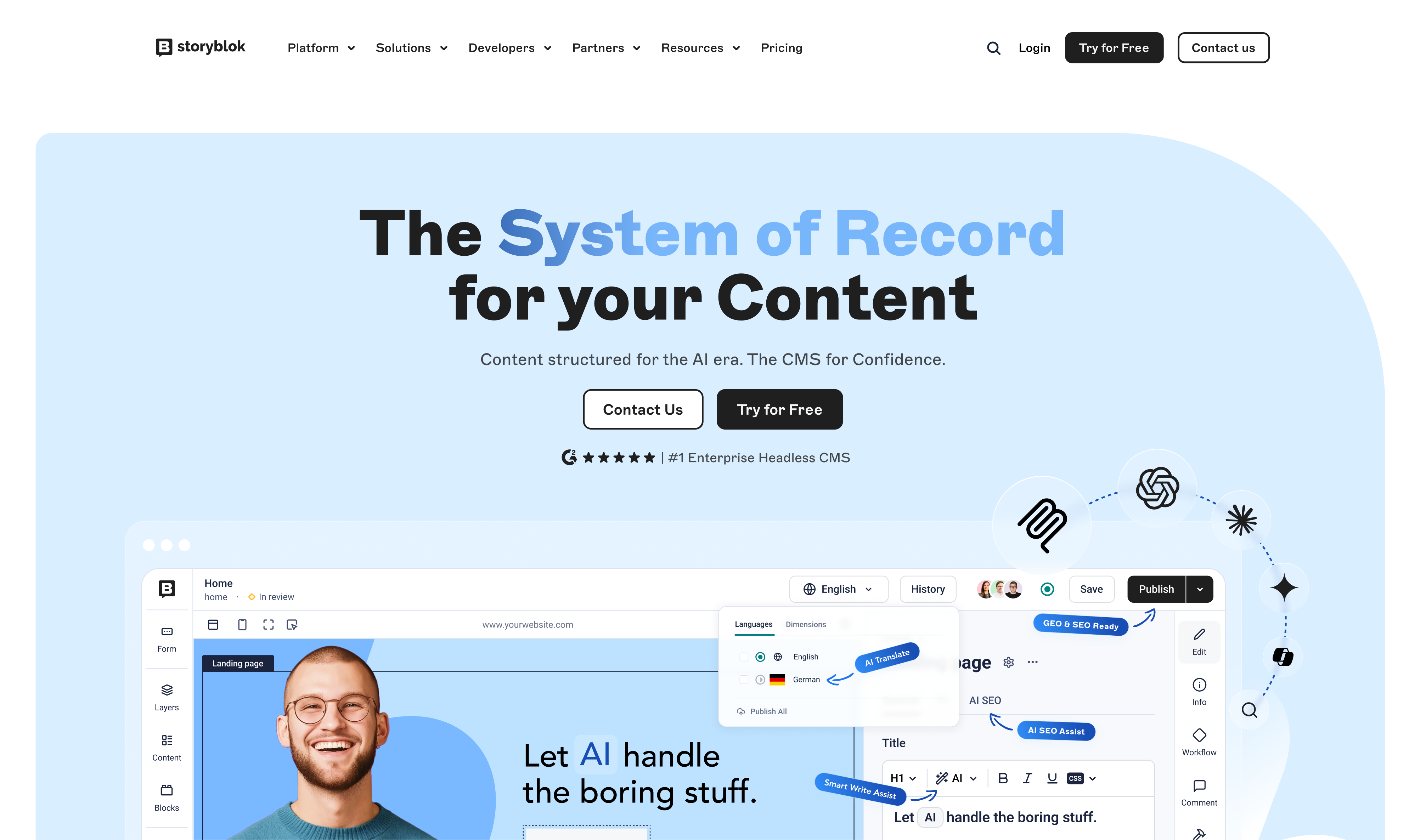
Storyblok is the leading cloud-native headless CMS, and a top Bloomreach alternative for teams that want to unbundle content management from an all-in-one commerce cloud without losing flexibility. It's frontend-agnostic, so developers can integrate any framework or third-party tool, and its component-based architecture, built around reusable content blocks, lets marketers assemble and update pages without waiting on a developer. G2 users have ranked it the #1 Headless CMS in the world.
That ease of use is a big part of why teams migrate: instead of managing separate learning curves across a CDP, a merchandising tool, and a CMS, editors get one intuitive Visual Editor with real-time previews, so they're productive from day one and onboarding costs stay low.
Pricing is another factor to consider. Instead of the custom, sales-call-only pricing typical of commerce experience clouds, Storyblok offers a transparent, predictable pricing structure, so you know what you're paying for and aren't stuck covering unused capacity from a bundled suite.
Beyond the platform, Storyblok backs teams with responsive support, a dedicated Helpdesk and thorough documentation, so help doesn't depend on which product in a bundle you're stuck on. And because it's built on a composable, API-first foundation with structured content models, clear ownership, and governance built in, it gives teams a trusted foundation that keeps pace with new frontends, channels, and AI-driven experiences, rather than tying you to one vendor's roadmap.
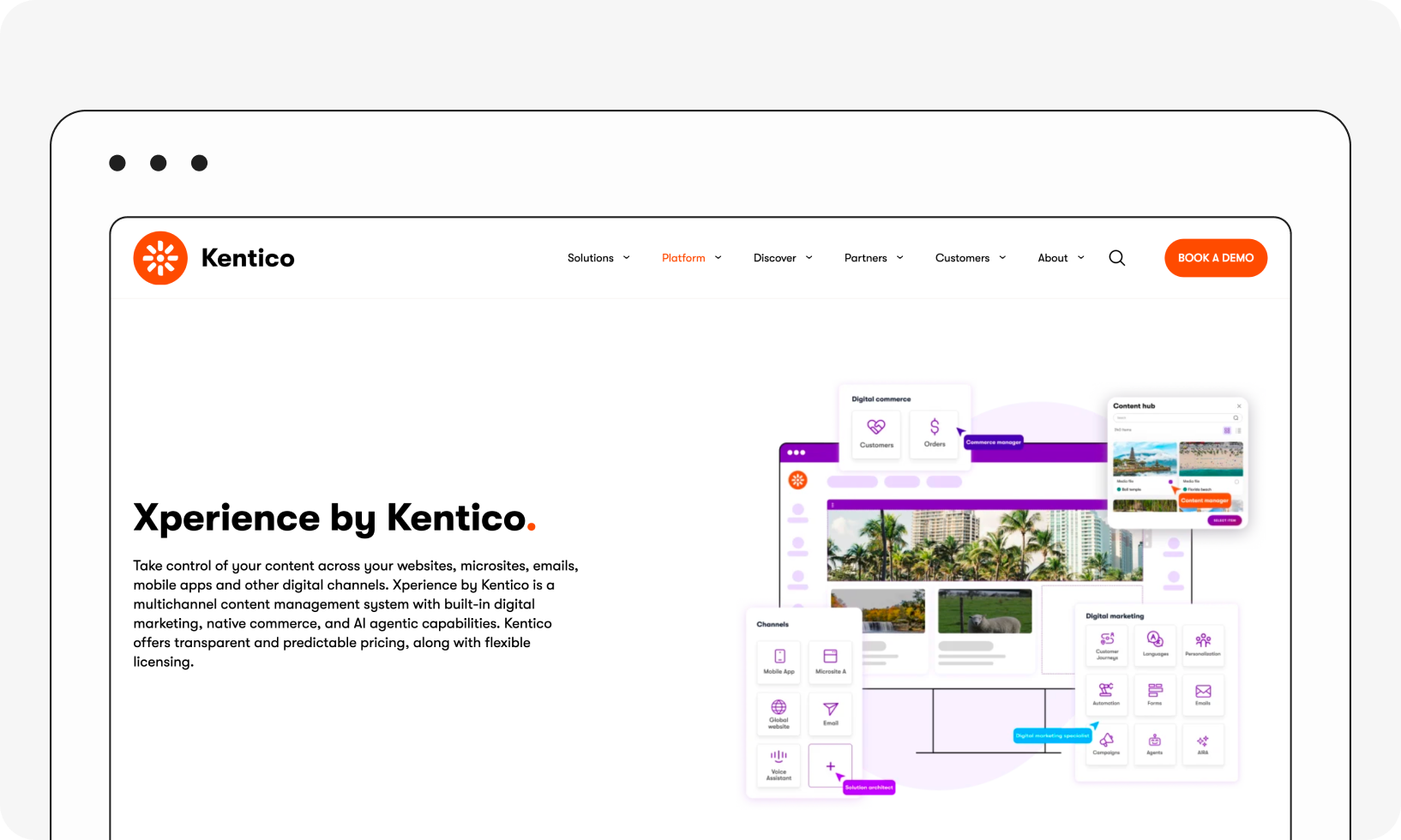
Kentico has rebranded its flagship DXP as Xperience by Kentico, moving from the legacy Kentico Xperience 13 (which reaches end-of-life in December 2026) to a modern, cloud-based platform. It holds G2 Leader status in the DXP category and offers a genuinely broad feature set—content hub, personalization, and AI-assisted marketing tools—with a strong reputation for ease of use on the .NET side.
It's a reasonable Bloomreach alternative for mid-market teams already invested in a Microsoft stack, though it presents a similar learning curve to Bloomreach for teams outside that ecosystem, and migrating from the legacy Kentico 13 to the new platform is effectively a rebuild rather than an upgrade.
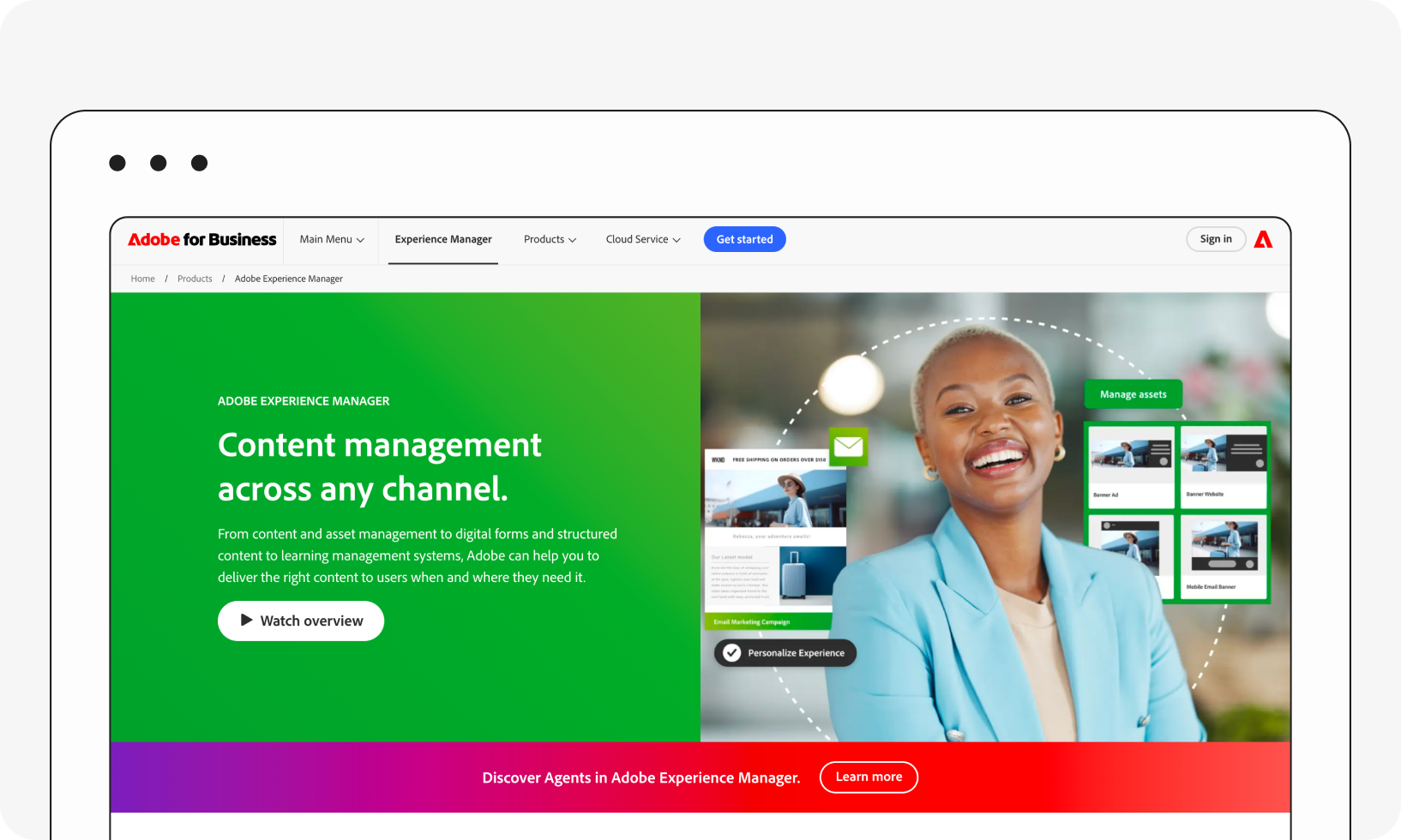
Adobe Experience Manager (AEM) remains a frequently cited Bloomreach alternative thanks to its thorough content management and digital asset management tooling, and it's especially common in industries where compliance and global content distribution are priorities. Even so, AEM isn't always the best fit for smaller teams: implementation is resource-intensive, licensing costs are high, and the learning curve is steep.
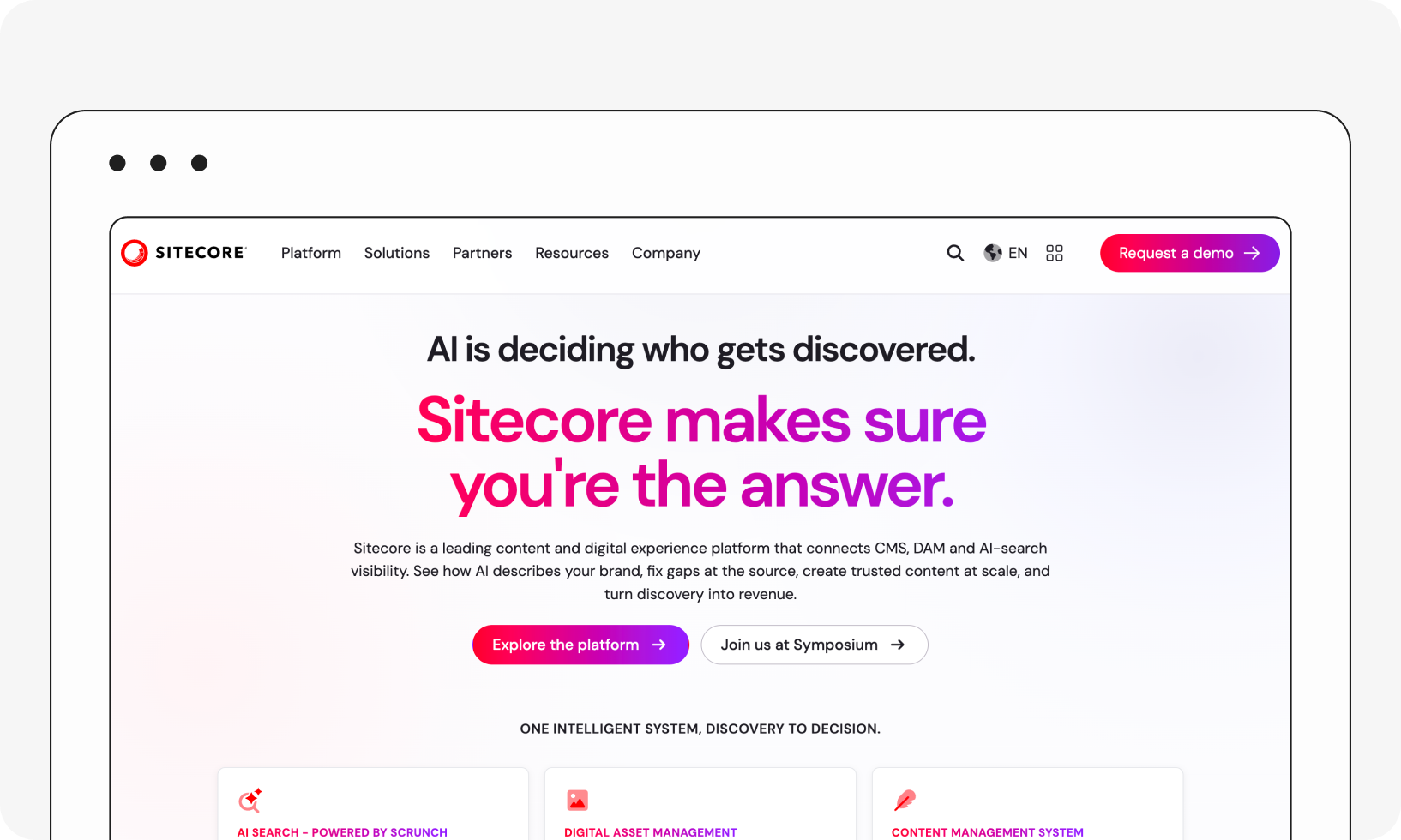
Sitecore continues to be one of the most powerful enterprise DXP ecosystems available, having evolved from a monolithic .NET CMS into a composable suite spanning XM Cloud, Content Hub, a CDP, Personalize, and an AI layer. It's frequently shortlisted alongside Optimizely and Adobe for large organizations that need integrated content, personalization, and analytics in one ecosystem. That power comes with real complexity, though, as reaching Sitecore's full capabilities requires significant implementation investment and specialized expertise, which can be a mismatch for teams with limited resources.
Thanks to its flexible, extensive plugin ecosystem, Drupal is a good fit for teams that want full control over their infrastructure without licensing costs. The trade-off is the same one open-source systems always carry: without dedicated, ongoing security management, self-hosted systems can be more vulnerable to attacks, which is a real consideration for larger enterprises with strict security requirements.
Optimizely has built significant momentum around a core strength: experimentation and optimization, now consolidated under the Optimizely One suite alongside its CMS and personalization tools. It's currently placed in the leader quadrant of major DXP analyst reports and is often the pick for teams whose top priority is A/B testing and conversion optimization alongside content management. Some users still report friction between the legacy CMS and the newer experimentation engine, and, as with the other full-suite DXPs on this list, implementation and total cost of ownership can be substantial.
HubSpot CMS is a good Bloomreach alternative for teams that want a user-friendly platform paired with a sophisticated inbound marketing suite, particularly for marketing-led organizations that don't need deep commerce-specific tooling. Costs scale up as teams and advanced features grow, though, and some users report more limited customization options compared to fully composable competitors.
What is the best Bloomreach alternative?
The best Bloomreach alternative depends on which part of Bloomreach's bundle you actually need. If you're primarily using it for content and don't need the CDP or merchandising tools bundled in, unbundling toward a focused headless CMS like Storyblok usually means less complexity and lower cost. If you need a full-suite DXP with built-in personalization and analytics, Sitecore, Optimizely, or AEM are the closest like-for-like replacements with a similarly significant implementation lift.
Frequently asked questions
Is Storyblok a good Bloomreach alternative for non-technical teams?
Yes. Storyblok's Visual Editor is built so marketers can create, preview, and publish content without relying on a developer for every change—useful for teams that found Bloomreach's multiple admin interfaces and learning curve difficult to manage day-to-day.
Do I need a full commerce experience cloud, or just a CMS?
It depends on how many of Bloomreach's bundled capabilities you actually use. If you mainly need content management and already have separate tools for search, personalization, or marketing automation, a focused headless CMS like Storyblok is usually simpler and more cost-effective than replacing one all-in-one platform with another. If you rely heavily on Bloomreach's integrated CDP, search, and merchandising together, a full-suite DXP like Sitecore, Optimizely, or Adobe Experience Manager is a closer like-for-like replacement.
Which alternative is best for teams that want to self-host?
Drupal is the strongest open-source option on this list, with a flexible plugin ecosystem and no licensing cost. The trade-off is that self-hosted systems need diligent, ongoing security management to stay safe from vulnerabilities.
Do these Bloomreach alternatives offer transparent pricing?
It varies. Storyblok publishes clear, scalable pricing plans. Full-suite DXPs like Sitecore, Optimizely, and Adobe Experience Manager typically require a custom quote, similar to Bloomreach itself. HubSpot and Xperience by Kentico publish some pricing, but costs rise as you add advanced features and seats.
How do I migrate from Bloomreach to a new platform?
The process depends on how much of the Bloomreach bundle you're replacing. Migrating just the CMS typically involves exporting content models and entries, then re-pointing your frontend's API calls to the new platform. Replacing the full suite (CDP, search, and marketing automation included) usually requires a phased migration, since those systems will need to be re-integrated with whatever new tools you choose. Most vendors, including Storyblok, offer migration guidance—worth asking about during a demo.
Is Bloomreach shutting down or being acquired?
No. Bloomreach continues to operate and update all three of its core products (Discovery, Engagement, and Content) as of 2026. Teams migrate away primarily due to cost, complexity, or needing only part of the bundle, not platform stability concerns.
What's the biggest factor in choosing between these alternatives?
Whether you need an integrated suite or a best-of-breed stack. If ease of use and cost predictability matter most, Storyblok is the strongest pick. If you need deep, natively integrated personalization and experimentation, Sitecore or Optimizely are the closer fit. If budget and open-source flexibility matter most, Drupal is worth a look.