Top 10 Best Hygraph Alternatives for 2026

Storyblok is the first headless CMS that works for developers & marketers alike.
Hygraph (formerly GraphCMS) remains a GraphQL-native headless CMS best known for its Content Federation capability, which lets teams unify content from multiple sources—a CMS, a database, an e-commerce platform—into a single GraphQL endpoint. This capability is genuinely unique in the headless CMS market and solves a real architectural problem for organizations that need to query multiple content sources as a single graph.
That said, Hygraph is explicitly positioned at enterprise teams, and its pricing reflects that: plans run from a free Hobby tier up to a Growth plan starting at $199/month, with Enterprise pricing custom-quoted. For smaller projects or straightforward marketing-site use cases, alternatives can offer more value at a lower price point, and some teams still run into the technical workarounds and learning-curve issues that sent people looking for alternatives in the first place.
If you're evaluating your options, here are 10 of the best Hygraph alternatives to consider in 2026.
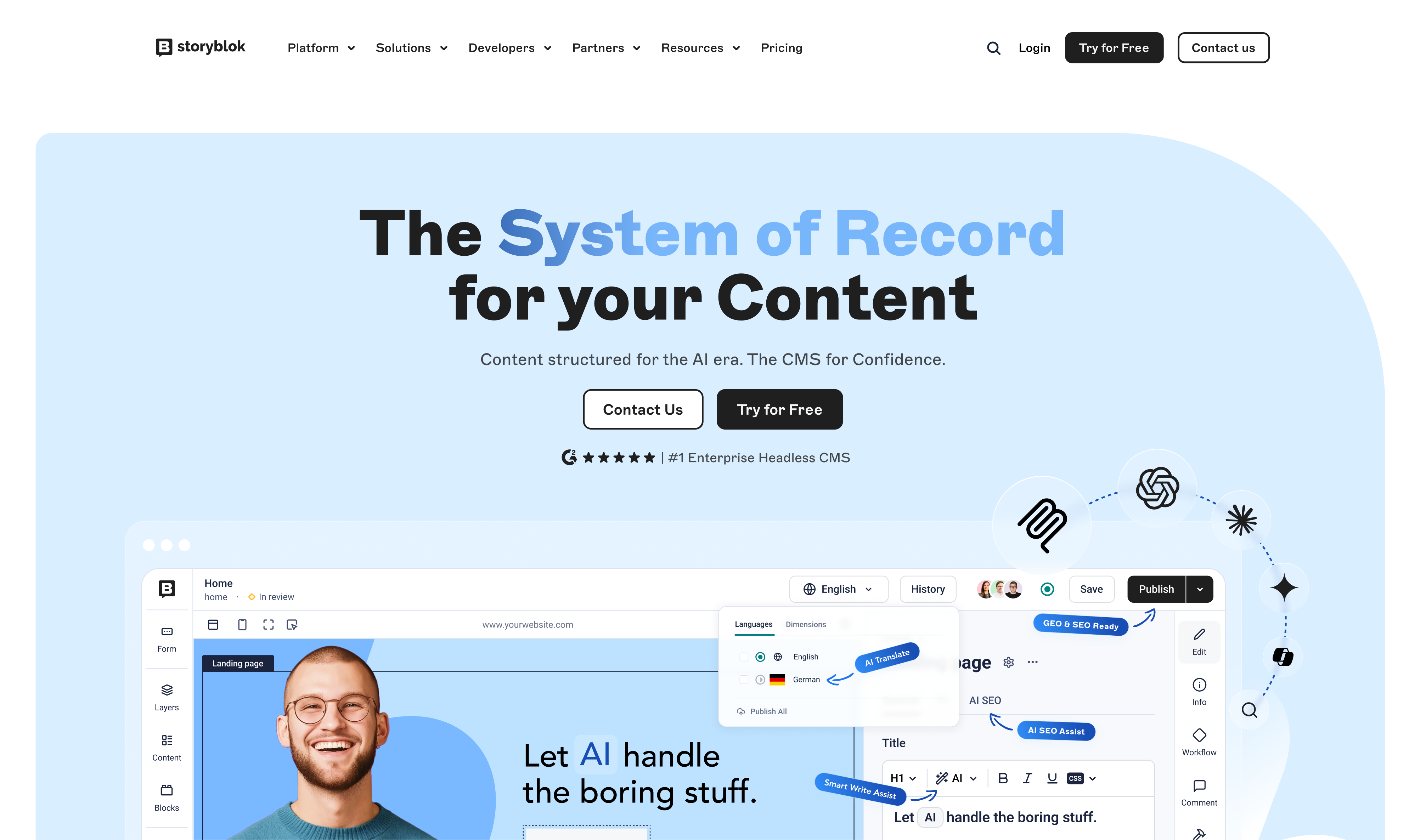
Storyblok is the leading cloud-native headless CMS and a top Hygraph alternative for teams that want developers and marketers working from the same platform. It's built around a component-based content architecture, reusable, nestable content blocks called Bloks, that let editors assemble pages without relying on developers after initial setup.
What consistently sets Storyblok apart is how quickly teams get productive with it. The Visual Editor is designed to be intuitive regardless of technical skill level, with real-time previews that let editors publish confidently without developer sign-off on every change. That ease of use translates directly into lower onboarding and training overhead, teams spend less time learning the tool and more time shipping content.
Pricing is similarly straightforward: transparent plans that scale with your business mean you always know what you're paying for, without the murky overage structures some Hygraph users run into. That value isn't just a claim, it's independently validated: Storyblok is ranked the #1 Headless CMS in the world on G2, based on reviews from the people using it every day rather than vendor briefings.
Additional features that make Storyblok a strong Hygraph alternative:
- Powerful SEO tools, including a dedicated native app
- Internationalization and personalization at no extra cost
- Enterprise-grade security that is ISO 27001 certified
Content built to be structured and headless by design, which keeps it directly usable by AI agents as AI-driven search plays a bigger role in discovery, part of what Storyblok calls Content Confidence
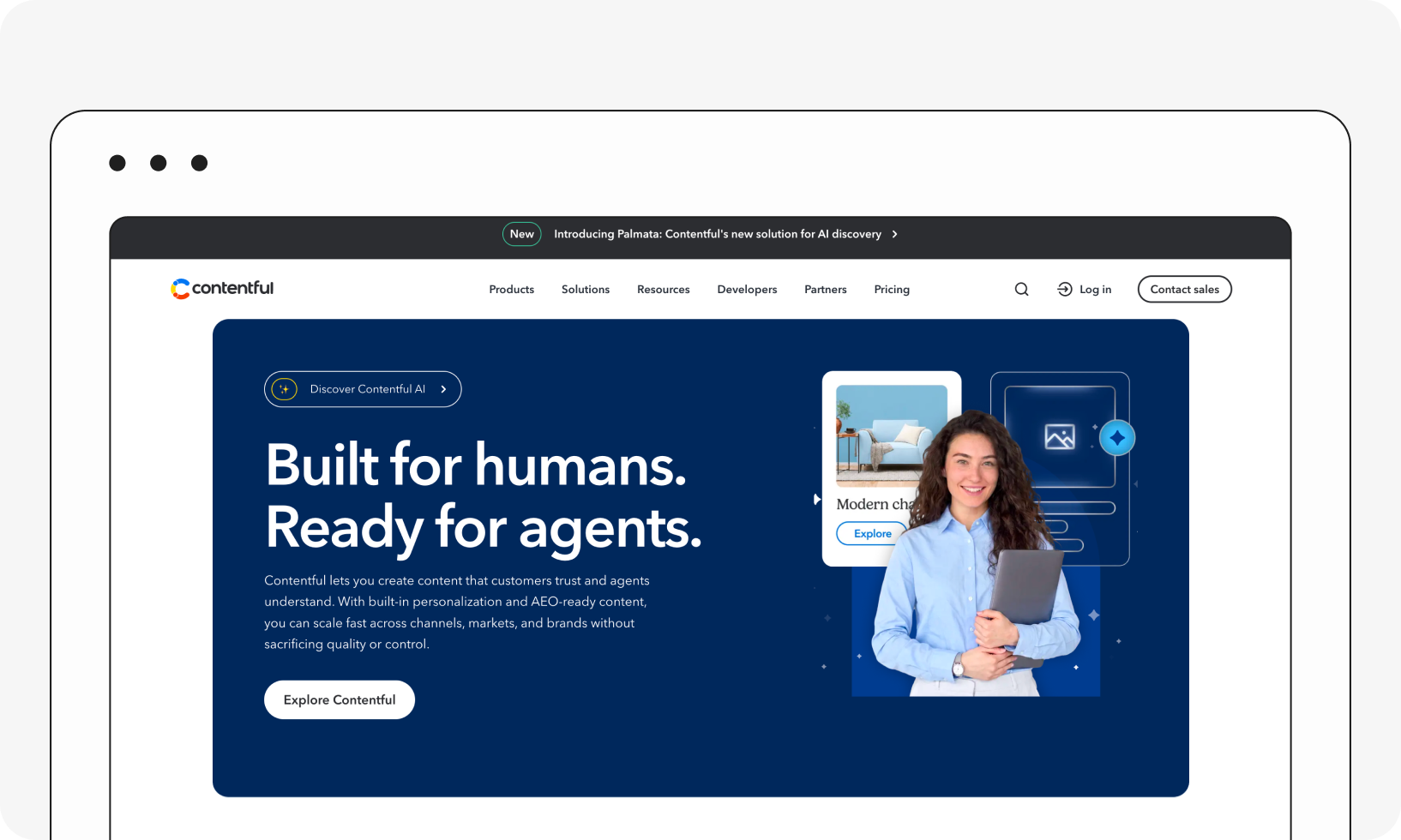
Contentful remains one of the most established names in headless CMS and is frequently cited as a go-to choice for enterprise content operations. It carries a 4.2 out of 5 rating on G2 from over 320 reviews, with reviewers consistently highlighting its API-first architecture, structured content modeling, and flexibility to integrate with any frontend framework.
Contentful offers a wide range of integrations and a strong user community, but some users note a steeper learning curve for non-technical team members, and pricing that can scale quickly at enterprise volume.
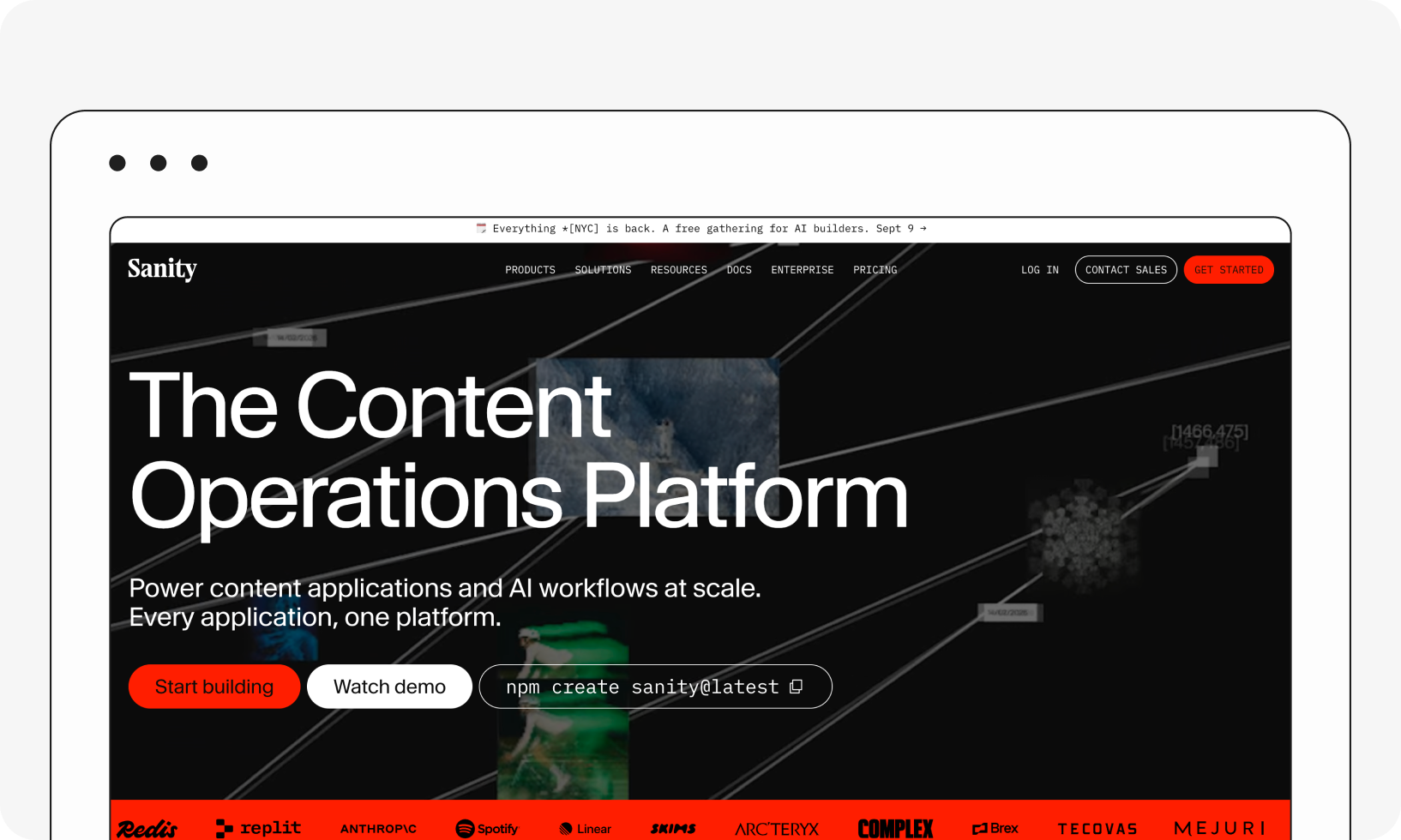
Sanity has built a reputation as a developer favorite, particularly for teams that need flexible content modeling and real-time collaborative editing. Its free tier is genuinely free forever for individuals and smaller projects, with a Growth plan around $15 per seat per month for teams needing more collaboration features, and custom Enterprise pricing for complex security and performance needs. It holds a 4.7 out of 5 rating on G2, among the highest of any platform in its category.
Some users find Sanity's documentation and content-structuring approach take time to master, but for teams that want maximum flexibility and multilingual support, it's a strong Hygraph alternative.
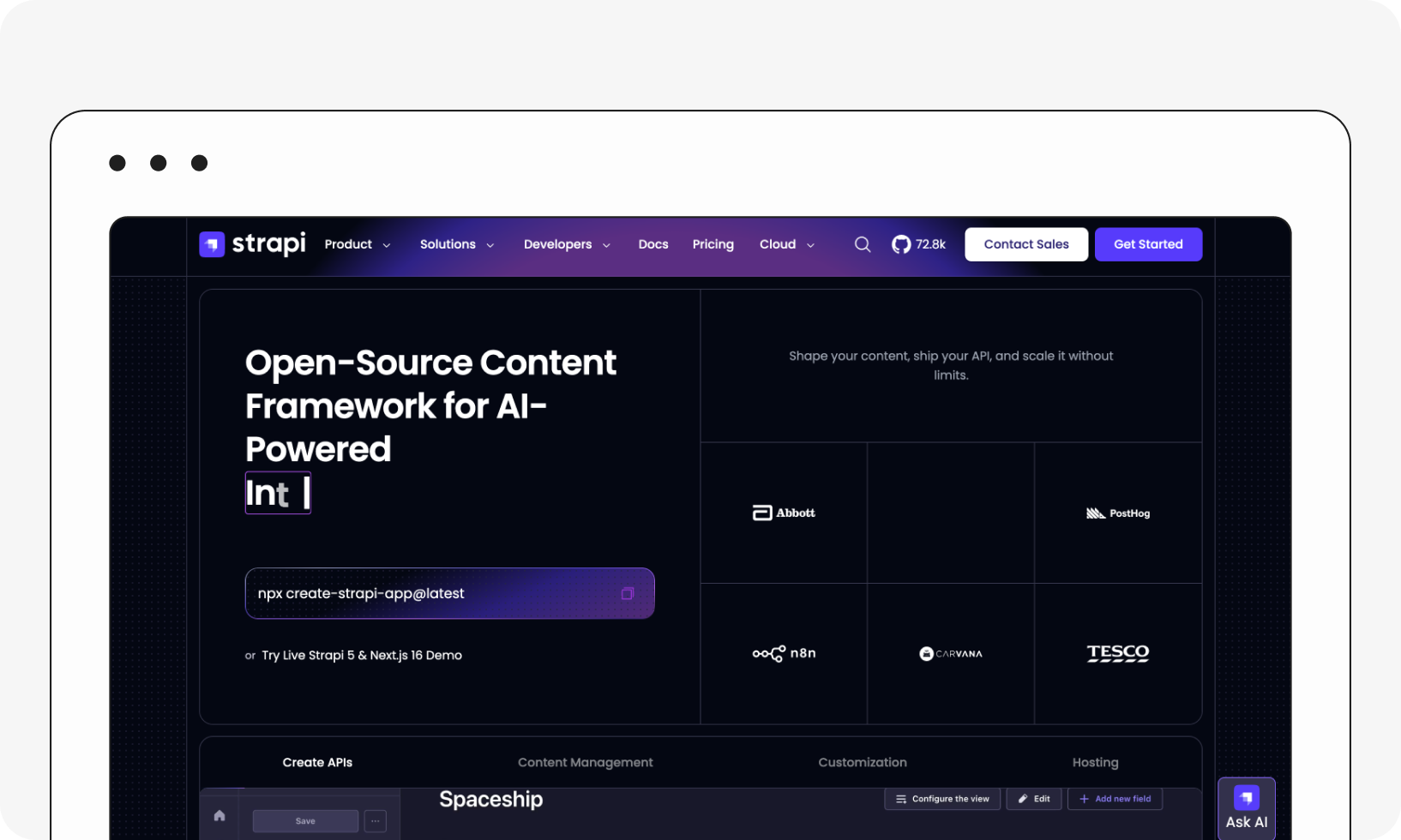
Strapi is the leading open-source headless CMS for teams that want full ownership of their content infrastructure rather than relying entirely on a SaaS vendor. It dominates the open-source segment with roughly 70,000 GitHub stars and the largest headless CMS community, and the core platform is free to self-host under an MIT license–the only option among major alternatives with zero baseline licensing cost. Teams can also opt for Strapi Cloud if they'd rather not manage their own infrastructure.
The trade-off with self-hosting is operational: you provision infrastructure, manage upgrades, and handle performance yourself. G2 users rate it 4.5 out of 5 from roughly 200 reviews, with praise for its flexibility and some criticism of support coverage outside enterprise tiers.
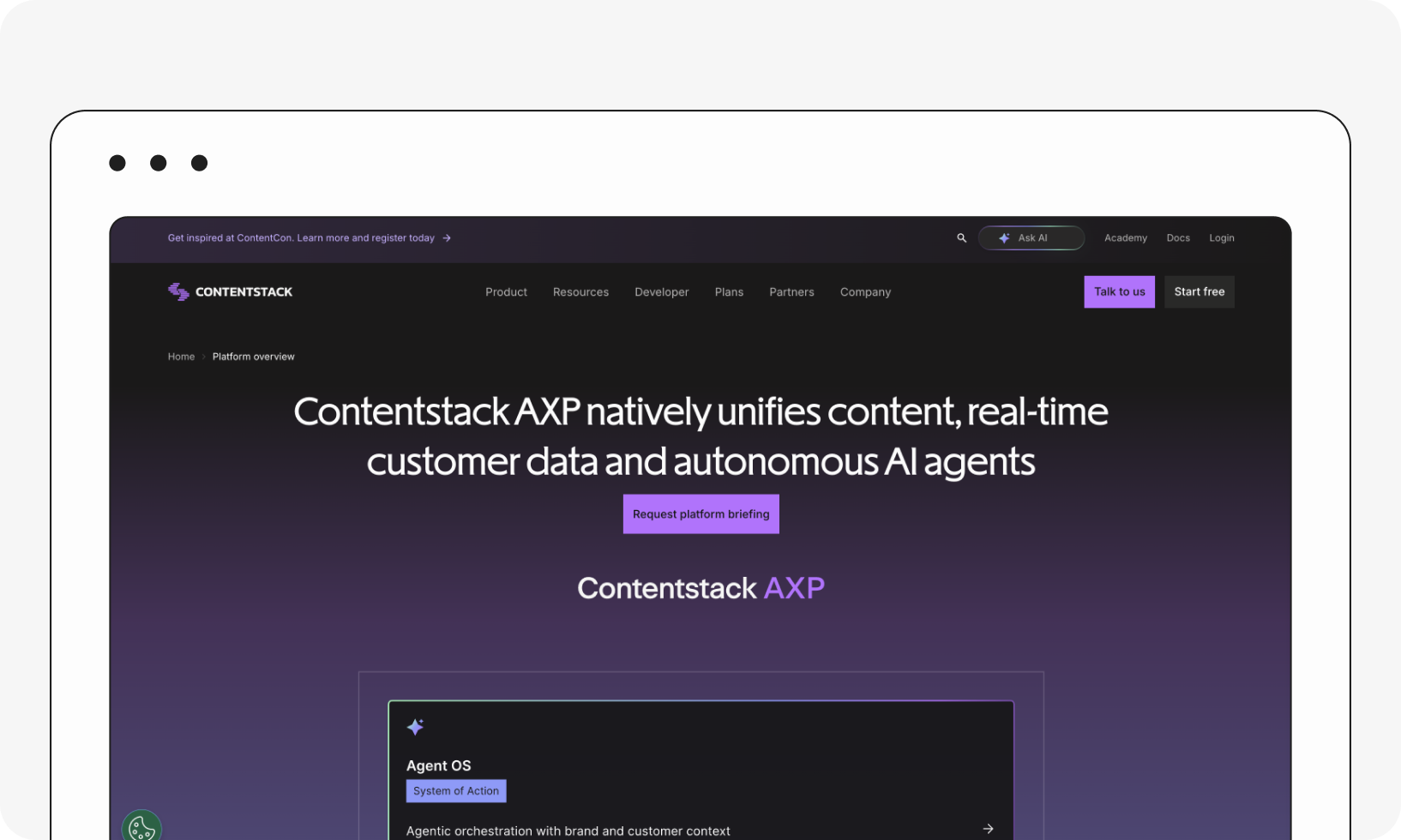
Contentstack is a well-established enterprise headless CMS, frequently named alongside Contentful as a best pick for enterprise scale and governance. It offers a marketplace of integrations, a mature partner ecosystem, and in-context preview tools that help editorial teams see changes before publishing. Some users find its native asset manager limited compared to competitors, though it's easy enough to plug in a third-party tool to fill the gap.
6. Kontent.ai
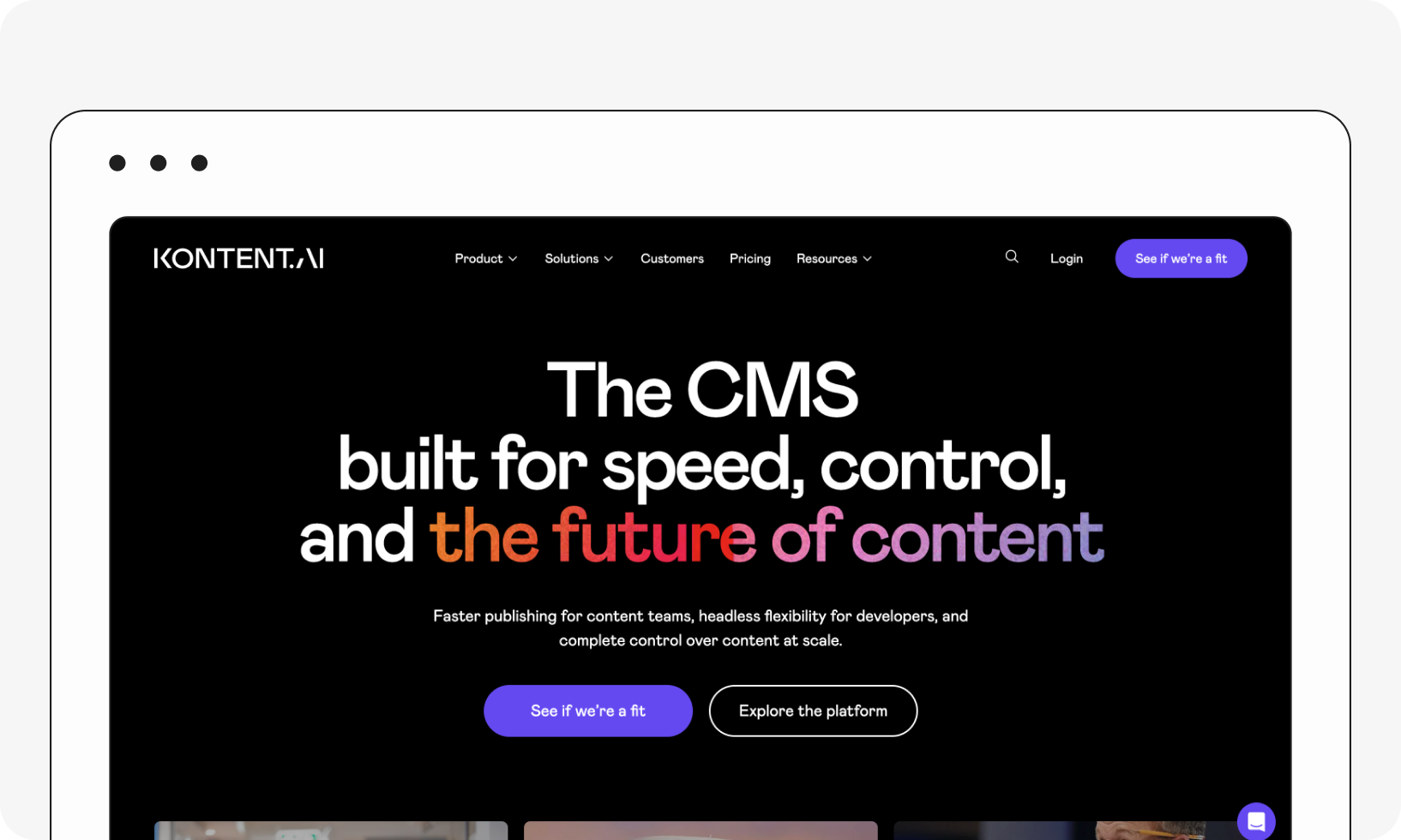
Kontent.ai continues to position itself as a flexible, enterprise-friendly headless CMS with strong governance and localization tooling for organizations managing content across multiple markets and brands. It's known for its partner ecosystem and a web spotlight tool for visualizing content in context. As with several competitors, pricing is customizable, which gives you more control but can also make costs harder to predict as you scale.

Payload has become one of the standout choices for teams building on Next.js, thanks to a code-first approach where the schema lives directly in TypeScript config files alongside your application, under an MIT license, with an opinionated, version-controlled workflow. It carries a 4.9 out of 5 G2 rating, and its Payload 3.0 release, which integrates tightly with Next.js, has been praised for meaningfully speeding up development.
The trade-off is accessibility for non-technical users: Payload's customization strength comes with a requirement for deeper development knowledge to fully leverage it, making it a better fit for developer-led teams than for marketer-first organizations.
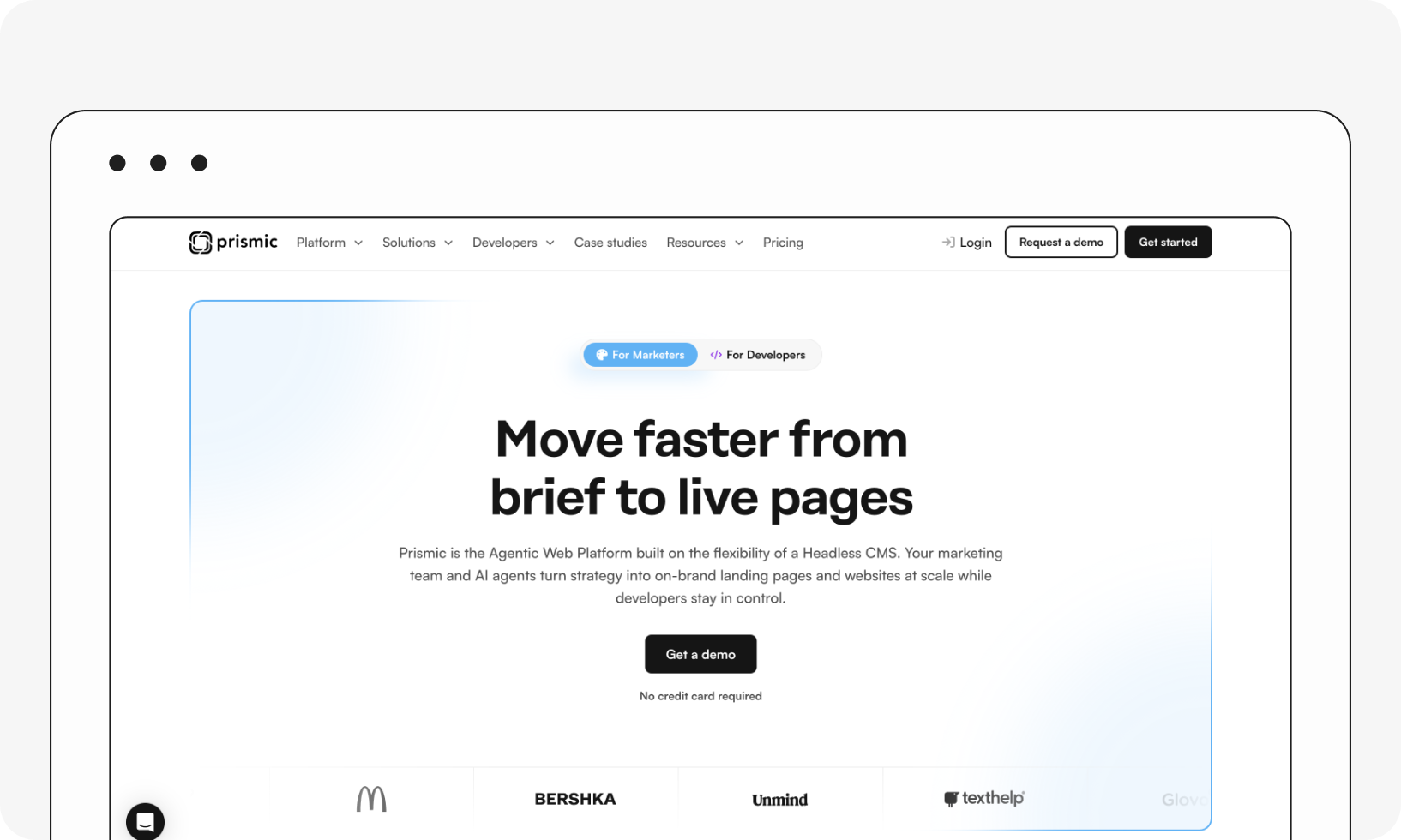
Prismic is a strong pick for teams that want marketers and developers collaborating closely on landing pages, largely thanks to its "Slices" page-builder approach for assembling reusable content components. It holds a 4.3 out of 5 G2 rating from 361 reviews, with reviewers frequently highlighting its intuitive interface and how easily non-developers can create and manage content without deep technical knowledge. Pricing starts free for a single user, with paid plans from around $7 per user per month and custom Enterprise pricing above that.
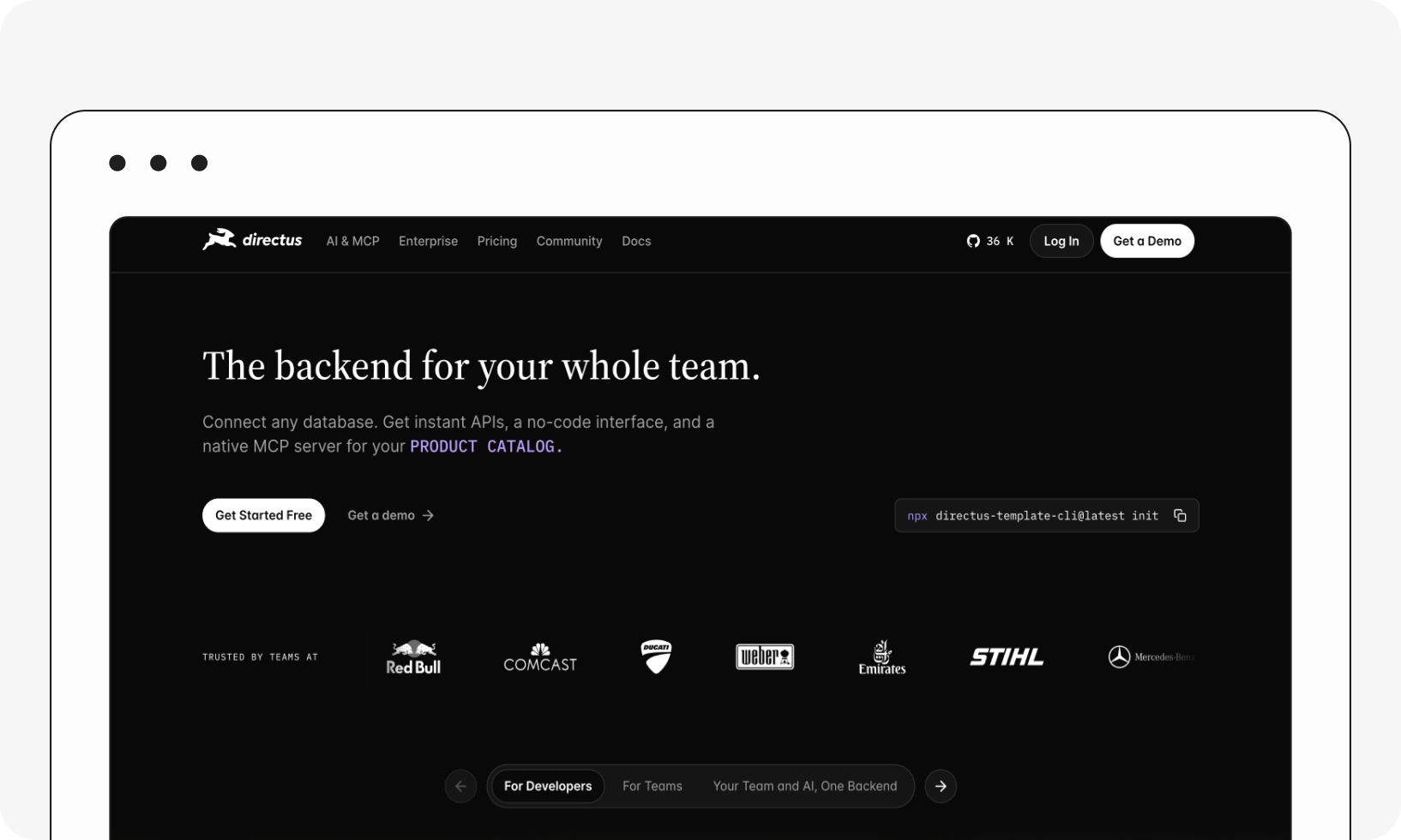
Directus takes a different architectural approach than most headless CMS platforms: rather than requiring you to restructure around the CMS's own schema, it's the option that connects natively to an existing SQL database, making it a strong fit for teams that already have data infrastructure in place. It's database-first, and ships with native dashboards, visual automation, an AI Assistant, an MCP server, and realtime APIs out of the box, effectively turning your backend into a shared workspace across content, operations, and AI agents.
Users note it lacks some of the enterprise-grade features and third-party plugin depth of platforms like Strapi or Contentful, but its documentation and active Discord community are frequently praised.
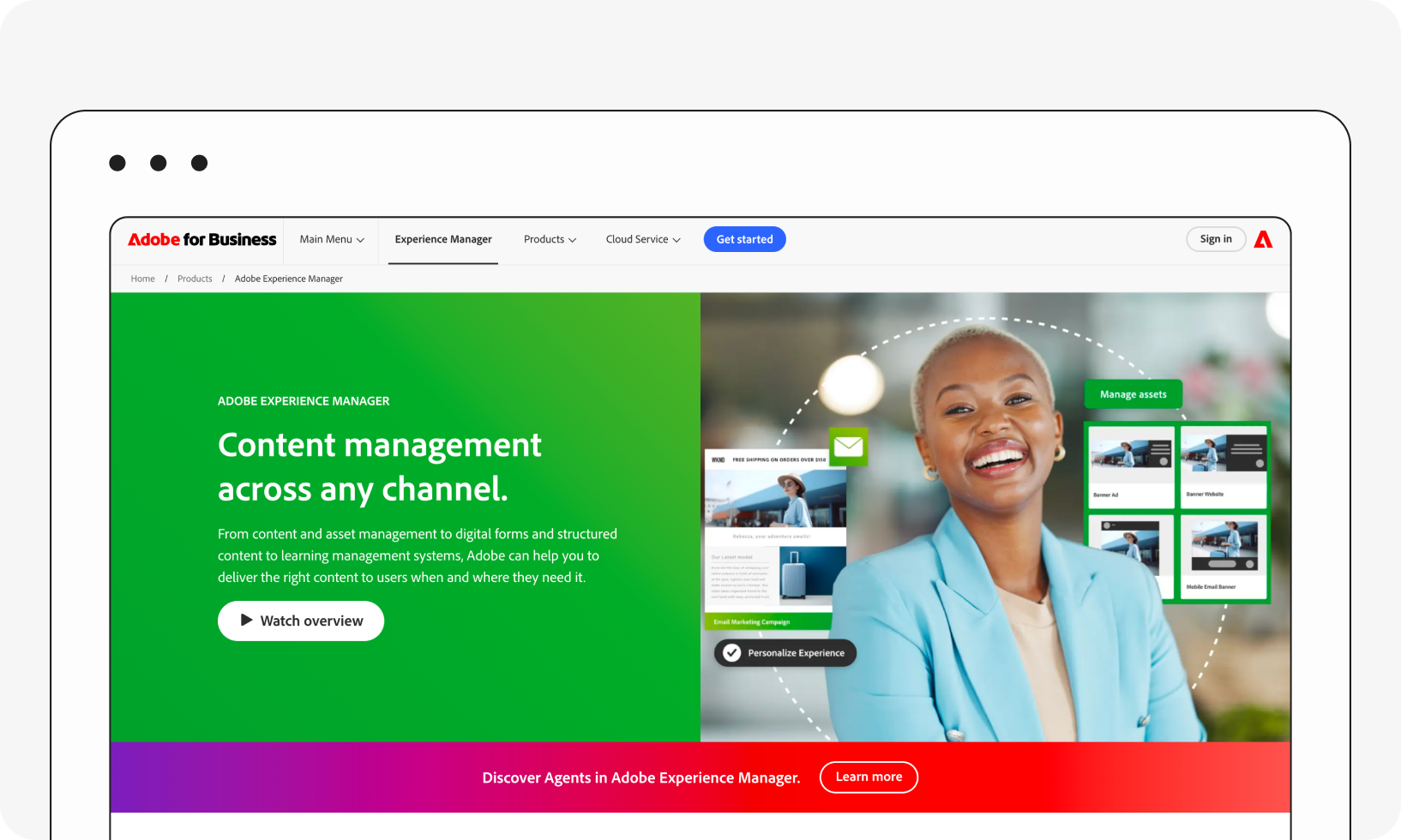
Adobe Experience Manager (AEM) remains a comprehensive option for large enterprises already invested in the Adobe ecosystem, offering hybrid content management across web, mobile, and other digital experiences, along with AI-powered authoring tools. Being part of Adobe's broader suite has clear advantages for teams using Adobe Analytics, Target, or Experience Cloud, but it can also mean higher costs and a harder migration path if you ever want to move away.
Which is the best alternative to Hygraph?
For most teams, Storyblok is the best overall alternative to Hygraph. It's easier for non-technical editors to use, has more predictable pricing, and doesn't require GraphQL expertise to get value from it.
Hygraph is still worth considering if you specifically need its Content Federation feature to unify multiple data sources into one GraphQL graph. But for everyday content management, Storyblok is the simpler, more cost-effective choice.
Frequently asked questions (FAQs)
What is a Hygraph alternative, and why do people look for one?
A Hygraph alternative is another headless CMS that can replace Hygraph's content management and delivery capabilities. Teams typically look for one when they hit Hygraph's enterprise-tier pricing without needing its Content Federation feature, when they need a more intuitive editorial experience for non-technical users, or when they need frontend flexibility that better matches their stack.
Is Storyblok a good Hygraph alternative for non-technical teams?
Yes. Storyblok's Visual Editor is built specifically so marketers and content editors can create, preview, and publish content without relying on a developer for every change, something that's often a friction point with GraphQL-first tools like Hygraph.
Which Hygraph alternative is best for developers who want to self-host?
Strapi, Payload CMS, and Directus are the strongest self-hosted, open-source options. Strapi has the largest community, Payload is the best fit for Next.js/TypeScript-first teams, and Directus is the best choice if you need to connect to an existing SQL database.
Which alternative is closest to Hygraph's GraphQL-native approach?
Contentful and Sanity both offer strong GraphQL support alongside REST, making them the more direct technical peers if GraphQL is a hard requirement.
Do these Hygraph alternatives offer free plans?
Most do. Sanity, Strapi, Payload, Directus, and Prismic all offer meaningful free tiers for small projects, though limits vary by seats, entries, and API calls. Storyblok also offers a free plan and a 14-day free trial of paid tiers.
How do I migrate from Hygraph to a new CMS?
The process generally involves exporting your content model and entries, mapping that schema to your new platform's content structure, and re-pointing your frontend's API calls. Most platforms, including Storyblok, offer migration support and documentation to help with this—worth asking about during a demo.
Is Hygraph shutting down or being acquired?
No. As of 2026, Hygraph continues to operate and update its platform, including its Content Federation and GraphQL tooling. The reasons teams migrate away are typically pricing fit or feature needs, not platform stability.
What's the biggest factor in choosing between these alternatives?
Architecture fit. If your priority is editorial ease of use, look at Storyblok, Prismic, or Kontent.ai. If it's developer control and self-hosting, look at Strapi, Payload, or Directus. If it's enterprise governance at scale, look at Contentful, Contentstack, or Adobe Experience Manager.